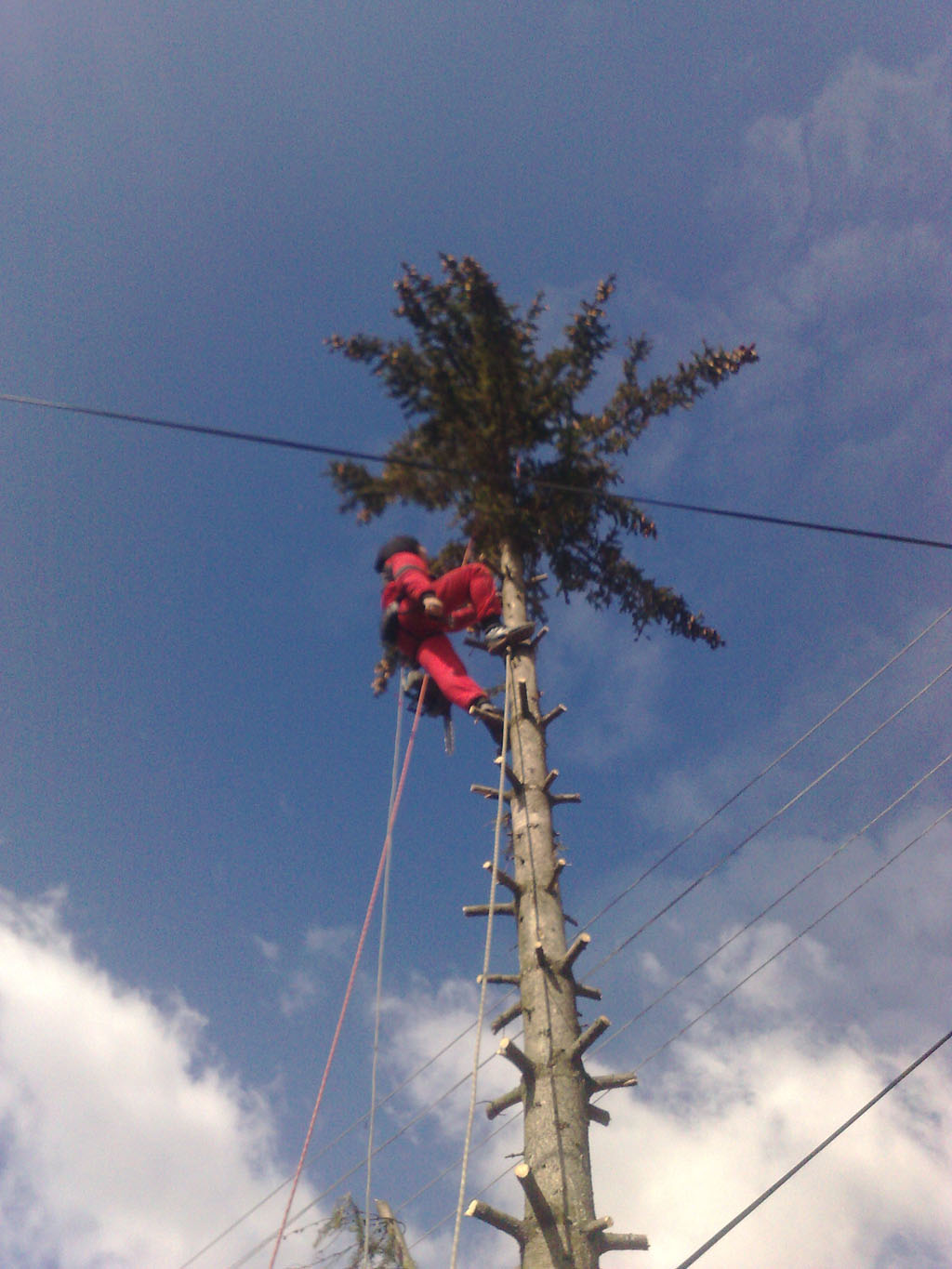
HAZARDOUS TREE REMOVAL
Principles and Techniques
Hazardous tree removal is a specialized method used in challenging conditions where a tree cannot be felled in one piece due to nearby buildings or power lines.
- • Sectional Felling: An arborist cuts the tree in sections, starting from the crown downwards.
- • Rigging & Lowering: Cut pieces are safely lowered using rope systems and pulleys to prevent property damage.
- • Pro Equipment: We use professional climbing gear, aerial platforms, and cranes for extreme cases.
Legislation and Timing
Tree removal is governed by legal regulations that determine when and under what conditions the work can be performed.
- • Dormant Season: Standard removal usually takes place from October 1st to March 31st.
- • Emergency State: Trees in a hazardous or dying state can be removed immediately (with subsequent notice to authorities).
- • Permits: Required for trees with a trunk circumference over 80 cm (measured at 130 cm height).
Process of Execution
We approach every tree individually with maximum emphasis on safety and precision.
- • Inspection & Plan: Expert assessment of tree stability and proposal of the most suitable method.
- • Permit Handling: Verification of permit requirements with the local municipal office.
- • Execution: The actual removal performed by certified arborists (ETW or ČCA).
- • Disposal: Wood removal, branch chipping, and optional stump grinding.